Stendhal on Eclipse: Difference between revisions
imported>AntumDeluge |
imported>Hendrik Brummermann |
||
| (168 intermediate revisions by 6 users not shown) | |||
| Line 1: | Line 1: | ||
{{Navigation for Stendhal Top|Building & Hosting}} |
{{Navigation for Stendhal Top|Building & Hosting}} |
||
This guide describes how to setup a development environment in Eclipse for Stendhal. |
|||
==First Steps== |
|||
<ol> |
|||
<li> First of all open the view called Package Explorer.</li> |
|||
<li> "New Project..."</li> |
|||
<li> "CVS" -> "Project from CVS" </li> |
|||
<li> Get stendhal from CVS. (Connection type: pserver, User: anonymous, Password - leave blank, Host:arianne.cvs.sourceforge.net, Repository: /cvsroot/arianne)</li> |
|||
<pre> |
|||
file-> new -> project -> project-> from cvs |
|||
click next |
|||
== Get Java == |
|||
check "create new repository" |
|||
click next |
|||
* If you can play Stendhal, you already have Java and can skip this step. |
|||
host : arianne.cvs.sourceforge.net |
|||
* If you do not have java installed, please download it https://java.com<br> (if you are on Linux, use your packet manager) |
|||
repository path : /cvsroot/arianne |
|||
user : anonymous |
|||
connection Type: pserver |
|||
click next |
|||
== Get Node.js == |
|||
check "use an existing module" |
|||
click directory: stendhal |
|||
click next |
|||
* https://nodejs.org (optional: for building & using web client) |
|||
checkout as a project configured using the new project wizard |
|||
click next |
|||
== Get Eclipse== |
|||
click finish |
|||
* Go to https://www.eclipse.org/downloads/ |
|||
select a wizard: java project (do not select a simple "general" project!) |
|||
* Download: "Eclipse IDE for Java Developers" |
|||
project Name: stendhal ( or whatever you like to call it ) |
|||
* Unzip the download and run Eclipse |
|||
make sure in jre a java version 1.5 or higher is selected |
|||
* In Eclipse, close the "Welcome" window |
|||
click finish |
|||
</pre> |
|||
<li> Right click on your project folder and select "Properties" in the context menu.</li> |
|||
<li> Then select "Java Build Path" on the left side of the dialog box.</li> |
|||
<li> Now remove all existing folders from source path and add the two source folders 'src' and 'tests' by clicking on the "Add Folder..." button</li> |
|||
<pre> |
|||
source folder #1: |
|||
stendhal/src |
|||
Included:(All) |
|||
Excluded:(None) |
|||
Native library location: (None) |
|||
You can click on the following images to see them in large. |
|||
source folder #2: |
|||
stendhal/tests |
|||
Included:(All) |
|||
Excluded:(None) |
|||
Native library location: (None) |
|||
<gallery> |
|||
default output folder: stendhal/bin |
|||
File:Eclipse_00.png|On the first run of Eclipse, this "Welcome" window is shown. Please close it. |
|||
</pre> |
|||
File:Eclipse_00a.png|Typical window layout with the Package Explorer on the left hand side and an empty area for editors in the middle |
|||
<li> On the "Libraries" tab: click on the "Add JARs" button and select all the *.jar-files in stendhal/libs</li> |
|||
</gallery> |
|||
<li> Check the text encoding at Project -> Properties -> Resource -> Text Encoding. Set it to UTF-8 unless it is that already.</li> |
|||
Note: If you installed Eclipse in Ubuntu via a package manager, also install: "eclipse-egit" |
|||
</ol> |
|||
Eclipse should be able to compile the source code now. There could be a little yellow sign (signalling warning messages) before your project folder but there must not be red X (error messages). The package explorer should now display the "src" folder below the root folder with a different icon, the icon is like a small grid. |
|||
== New Project from Git == |
|||
In Eclipse: |
|||
* Open menu "File -> Import |
|||
* In the dialog select: "Git -> Projects from Git" and click "Next". |
|||
* Select "Clone URI" and click "Next". |
|||
* Fill in the following information: |
|||
** '''URI''': |
|||
*** GitHub readonly: <code><nowiki>https://github.com/arianne/stendhal.git</nowiki></code><br>(if you have a github account, please go to https://github.com/arianne/stendhal and click on "Fork" to create you own copy of the repository and then use that in Eclipse instead) |
|||
*** GitHub read/write (SSH): <code><nowiki>git@github.com:arianne/stendhal.git</nowiki></code> |
|||
* The result of the fields are filled in automatically, click "Next" |
|||
* On the Branch selection page, keep everything selected and click "Next" |
|||
* Under "Destination" choose the directory where you want to download the source code and select "Next". |
|||
* Eclipse will now download Stendhal from git, this may take a while |
|||
* "Import existing projects" and select "Next" |
|||
* "Finish" import of project Stendhal |
|||
Click on the screenshots to enlarge them, if you need help with any of the steps: |
|||
<gallery> |
|||
Eclipse 01.png|Open File | Import |
|||
Eclipse 02.png|Import from Git |
|||
Eclipse 03.png|Clone URI |
|||
Eclipse 04.png|Fill in URI and watch the remaining fields to be filled automatically |
|||
Eclipse 05.png|Just click "next" on branch selection |
|||
Eclipse 06.png|Just click "next" on destination |
|||
Eclipse 07.png|Wait for the download to complete. This may take quite a while |
|||
Eclipse 08.png|Import existing project |
|||
Eclipse 09.png|Confirm import of project "Stendhal" by clicking finish |
|||
</gallery> |
|||
==Trouble Shooting== |
==Trouble Shooting== |
||
menu Windows | Preferences | Java | Installed JREs |
|||
* there should be at least one entry with a valid JAVA_HOME path (make it so so JDK compliance is 5.0 ?) |
|||
After completing the import wizard, Eclipse should look like the following screenshot: |
|||
==To make it run the server in Debug mode== |
|||
[[File:Eclipse_debug_configurations_menu.png|right]] |
|||
[[File:Eclipse 10.png]] |
|||
There is a project called "stendhal" listed in the Package Explorer view. There may be a tiny yellow triangle in front of the blue project icon. But if you see a red circle or a red exclamation mark, something went wrong. In this case there will be an error in the "Problems" view at the bottom. |
|||
== Start StendhalServer == |
|||
* In the toolbar there is the "Debug" button, which looks like a little, green bug. There is a little black arrow on the right side of it. |
* In the toolbar there is the "Debug" button, which looks like a little, green bug. There is a little black arrow on the right side of it. |
||
[[File:Eclipse_debug_configurations_menu.png]] |
|||
* This will open a menu, please choose "Debug configurations ..." ("Open Debug Dialog..." on older versions) |
* This will open a menu, please choose "Debug configurations ..." ("Open Debug Dialog..." on older versions) |
||
* Then in the dialog select "Java Application" and click on the "new" icon in the top left corner. |
* Then in the dialog select "Java Application" and click on the "new" icon in the top left corner. |
||
[[File:Eclipse_new_debug_configuration.png]] |
|||
Name: StendhalServer |
|||
Main class: games.stendhal.server.StendhalServer |
Main class: games.stendhal.server.StendhalServer |
||
* All other settings ("include system libries", "Stop in main", ... can be left at their default value. |
* All other settings ("include system libries", "Stop in main", ... can be left at their default value. |
||
* on the [Arguments] tab: VM arguments: -Xmx128M |
|||
* on the [Classpath] tab: click "UserEntries" - button "Advanced" - (*) add folder | OK - and select the "stendhal" project root folder | OK |
|||
on the [Arguments] tab: |
|||
VM arguments: -Xmx128M |
|||
on the [Classpath] tab: |
|||
click UserEntries |
|||
button "Advanced" |
|||
(*) add folder | OK |
|||
and select the project root folder | OK |
|||
</pre> |
|||
* button [Debug] |
* button [Debug] |
||
And then the server should be started. |
And then the server should be started. |
||
NOTE: On newer Eclipse versions, the [Classpath Entries] are under Dependencies tab. |
|||
==To make the client run== |
|||
== Start Stendhal Client == |
|||
# Open games.stendhal.client.update.Starter.java in the editor |
# Open games.stendhal.client.update.Starter.java in the editor |
||
# Then again the small black arrow on the right side of the green bug. |
# Then again the small black arrow on the right side of the green bug. |
||
# Select "Debug Configurations" (or "Run Configurations..."). |
# Select "Debug Configurations" (or "Run Configurations..."). |
||
# Select Java Application and click the "New" button in upper-left corner. |
# Select Java Application and click the "New" button in upper-left corner. |
||
# On the [Classpath] tab select "User Entries" - button "Advanced" - (*) add folder | OK - and select the project root folder. | OK |
# On the [Classpath] tab select "User Entries" - button "Advanced" - (*) add folder | OK - and select the project root folder. | OK |
||
yay shiny new client, shiny server |
|||
== Making patches == |
== Making patches == |
||
| Line 99: | Line 100: | ||
==Running JUnit Tests in Eclipse== |
==Running JUnit Tests in Eclipse== |
||
This is an advanced topic. If you make changes to the Java code, it is a good idea to run the automatic test. |
|||
Setting up JUnit tests in Eclipse: |
Setting up JUnit tests in Eclipse: |
||
# Click the arrow next to either the green "Run" or "Debug" button. |
# Click the arrow next to either the green "Run" or "Debug" button. |
||
| Line 116: | Line 120: | ||
# Under the Stendhal root folder select all the .jar files in libs and press OK. |
# Under the Stendhal root folder select all the .jar files in libs and press OK. |
||
# Now press "Apply" to save the configuration or "Run" to save and run it. |
# Now press "Apply" to save the configuration or "Run" to save and run it. |
||
==Switching from pserver to extssh== |
|||
If you need to switch from anonymous read-only access to read/write, follow these |
|||
instructions. |
|||
(based on clues at http://blog.maestropublishing.com/changing-cvs-username-and-password-in-an-ecli) |
|||
# Window -> Show View -> Other |
|||
# Open up CVS, and double click on "CVS Repositories". A new tab will show up, named CVS Repositories |
|||
# Right click on the arianne line, and select Properties |
|||
# Change Connection Type to extssh |
|||
# Set User and Password to your sourceforge user id and password |
|||
# Click Apply. Eclipse will take a few minutes to update attributes. |
|||
After that, test by trying another CVS Synchronize. The first time, you will probably get a dialog about the server certificate. |
|||
Latest revision as of 18:13, 20 June 2023
- |


This guide describes how to setup a development environment in Eclipse for Stendhal.
Get Java
- If you can play Stendhal, you already have Java and can skip this step.
- If you do not have java installed, please download it https://java.com
(if you are on Linux, use your packet manager)
Get Node.js
- https://nodejs.org (optional: for building & using web client)
Get Eclipse
- Go to https://www.eclipse.org/downloads/
- Download: "Eclipse IDE for Java Developers"
- Unzip the download and run Eclipse
- In Eclipse, close the "Welcome" window
You can click on the following images to see them in large.
-
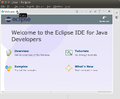 On the first run of Eclipse, this "Welcome" window is shown. Please close it.
 -
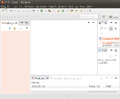 Typical window layout with the Package Explorer on the left hand side and an empty area for editors in the middle


Note: If you installed Eclipse in Ubuntu via a package manager, also install: "eclipse-egit"
New Project from Git
In Eclipse:
- Open menu "File -> Import
- In the dialog select: "Git -> Projects from Git" and click "Next".
- Select "Clone URI" and click "Next".
- Fill in the following information:
- URI:
- GitHub readonly:
https://github.com/arianne/stendhal.git
(if you have a github account, please go to https://github.com/arianne/stendhal and click on "Fork" to create you own copy of the repository and then use that in Eclipse instead) - GitHub read/write (SSH):
git@github.com:arianne/stendhal.git
- GitHub readonly:
- URI:
- The result of the fields are filled in automatically, click "Next"
- On the Branch selection page, keep everything selected and click "Next"
- Under "Destination" choose the directory where you want to download the source code and select "Next".
- Eclipse will now download Stendhal from git, this may take a while
- "Import existing projects" and select "Next"
- "Finish" import of project Stendhal
Click on the screenshots to enlarge them, if you need help with any of the steps:
-
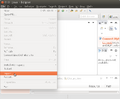 Import
 -
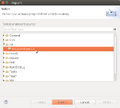 Import from Git
 -
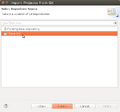 Clone URI
 -
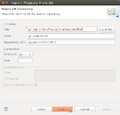 Fill in URI and watch the remaining fields to be filled automatically
 -
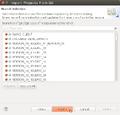 Just click "next" on branch selection
 -
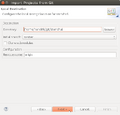 Just click "next" on destination
 -
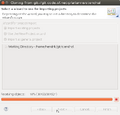 Wait for the download to complete. This may take quite a while
 -
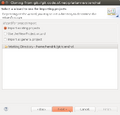 Import existing project
 -
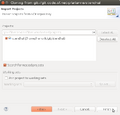 Confirm import of project "Stendhal" by clicking finish


Trouble Shooting
After completing the import wizard, Eclipse should look like the following screenshot:

There is a project called "stendhal" listed in the Package Explorer view. There may be a tiny yellow triangle in front of the blue project icon. But if you see a red circle or a red exclamation mark, something went wrong. In this case there will be an error in the "Problems" view at the bottom.
Start StendhalServer
- In the toolbar there is the "Debug" button, which looks like a little, green bug. There is a little black arrow on the right side of it.

- This will open a menu, please choose "Debug configurations ..." ("Open Debug Dialog..." on older versions)
- Then in the dialog select "Java Application" and click on the "new" icon in the top left corner.

Name: StendhalServer
Main class: games.stendhal.server.StendhalServer
- All other settings ("include system libries", "Stop in main", ... can be left at their default value.
- on the [Arguments] tab: VM arguments: -Xmx128M
- on the [Classpath] tab: click "UserEntries" - button "Advanced" - (*) add folder | OK - and select the "stendhal" project root folder | OK
- button [Debug]
And then the server should be started.
NOTE: On newer Eclipse versions, the [Classpath Entries] are under Dependencies tab.
Start Stendhal Client
- Open games.stendhal.client.update.Starter.java in the editor
- Then again the small black arrow on the right side of the green bug.
- Select "Debug Configurations" (or "Run Configurations...").
- Select Java Application and click the "New" button in upper-left corner.
- On the [Classpath] tab select "User Entries" - button "Advanced" - (*) add folder | OK - and select the project root folder. | OK
Making patches
If you have modified and tested the code and want to send us a patch, please see How To Create Patch For Stendhal.
Running JUnit Tests in Eclipse
This is an advanced topic. If you make changes to the Java code, it is a good idea to run the automatic test.
Setting up JUnit tests in Eclipse:
- Click the arrow next to either the green "Run" or "Debug" button.
- Select "Run/Debug Configurations...".
- Select "JUnit" in the left column and press the "New launch configuration" at the top of left column.
- Give it a unique name, like "Stendhal Tests".
- Select "Run all tests in the selected project, package or source folder".
- OPTIONAL: (this step simply reduces the number of directories that Eclipse will search in for tests)
- Press "Search".
- Select "tests" folder under Stendhal root directory and press "OK".
- Under "Test runner" select "JUnit 4".
- Under "Classpath" tab select "User Entries" and press "Advanced" on the right panel.
- NOTE: There should already be a folder under "User Entries" with a "(default classpath)" suffix. Do not delete this folder.
- Select "Add Folders" and press "OK".
- Select the Stendhal root folder and press "OK".
- Now click "Add JARs..." on the right panel.
- Under the Stendhal root folder select all the .jar files in libs and press OK.
- Now press "Apply" to save the configuration or "Run" to save and run it.